
What ID a Notary Can Legally Accept and What Happens When Yours Is Expired
Most notary appointments that fall apart do not fail because of the document. They fail because of the identification. Texas sets specific rules about how a notary confirms who you are, and those rules do not bend for a friendly face or a good explanation. Summer makes the problem sharper, since travel consent forms, passport paperwork, estate documents, and closing packages all stack up between June and September while driver license renewal appointments stay booked out for weeks. A card that expired last spring feels harmless until a notary hands it back across the table. The good news is that this is a fixable problem when you catch it early instead of five minutes before the signing. Knowing what counts as acceptable identification, what actually happens when yours has expired, and what backup routes exist will keep your appointment on schedule. A few minutes of preparation saves a second trip, a second travel fee, and a blown deadline.
What ID a Notary Can Legally Accept in Texas
Texas law is narrower than most people expect. Under Section 121.005 of the Texas Civil Practice and Remedies Code, a notary confirms identity through personal knowledge of the signer or through an identification card or document issued by the federal government or a state government that contains both the photograph and the signature of the person signing. Those two elements matter equally. A card with a photo but no signature line falls short, and a document with a signature but no photograph falls short as well. Texas also requires notaries to keep a record book under Section 406.014 of the Texas Government Code, and that entry notes how identity was established, so the choice gets documented in writing. Texas does not offer the broad credible witness route that states like California allow, which means your identification carries almost all of the weight in a standard appointment. That is why a quick check of your wallet before booking is worth far more than any argument at the table.
The Government Issued ID a Notary Can Legally Accept Most Often
The Texas driver license and the Texas identification card are the workhorses of this trade, and they clear the statutory bar cleanly because they carry a photograph, a signature, and a state issuing authority. A driver license or identification card from any other state works the same way, so a signer who just moved to Frisco from Colorado or Ohio is fine using the card still in their pocket. A United States passport book or passport card also qualifies, since both are federal documents with a photograph and a signature panel. Military identification cards issued by the Department of Defense qualify as well, including dependent cards, which comes up often around the Dallas metro. Tribal identification cards issued by a federally recognized tribe generally satisfy the same test when they carry the photo and signature. The card simply needs to be a real credential from a real government body, with your face and your signature on it, and it needs to match the name on the document you are signing.
Name matching trips people up more often than the card itself. Your identification does not have to match the document letter for letter in every situation, but it does need to reasonably support the name being signed, and a notary is allowed to decline when the gap is too wide. A signer named Robert who is listed as Bob on a deed usually clears without trouble; a signer whose license still shows a maiden name while the document uses a married surname is a much closer call and depends on the receiving party. Title companies, lenders, and county clerks tend to be strict here because the recorded chain of ownership has to hold up years later. Bringing a marriage license, a court order, or a divorce decree alongside the license often solves the problem, though the receiving party still makes the final call on their own paperwork. Middle initials, suffixes like Junior and the Third, and hyphenated legal names all deserve a phone call before the appointment rather than a surprise during it. The rule of thumb is simple: if you can already see the mismatch, so can everyone else in the chain.
The physical condition of the card matters too. A license that has been through a washing machine, cracked down the middle, or laminated by hand is not the credential the state issued anymore, and a notary may reasonably refuse it. The same goes for a card where the photograph has worn away, where the signature panel is smudged past reading, or where the tamper pattern looks disturbed. Texas notaries carry personal liability for the identifications they accept, and a damaged card gives them very little to stand on. Digital credentials such as the Texas Mobile ID app sit in a gray zone for traditional signings and are frequently declined, so bring the physical card even when the app is on your phone. Photocopies, scans, and photographs of a license never satisfy the requirement, no matter how clear the image is. Present the original card, in your hand, in person. Need a notary for passport paperwork this summer? Click here for our passport notary service.

ID a Notary Can Legally Accept for Green Card Holders, Visa Holders, and Military Families
Permanent resident cards, commonly called green cards, are issued by United States Citizenship and Immigration Services and carry a photograph and a signature, which places them squarely within what Texas law contemplates. Employment authorization documents follow the same pattern and are widely accepted for the same reason. These credentials show up constantly in immigration paperwork, affidavits of support, sponsor forms, and consent letters across Plano, Richardson, Carrollton, and Garland. The important detail is that the card must be your own, current, and physically present at the signing. A receipt notice, an approval notice, or a case number printout is not a photo identification and cannot substitute for the card itself. When your card is in renewal status and you are holding only a notice extending its validity, call ahead so the situation can be sorted out before anyone drives across town.
Foreign passports create a real question under the wording of the Texas statute, which points to documents issued by the federal government or a state government. A passport from another country is issued by a foreign government, so it does not fit that language on its face, and notaries take different positions on it. Some will accept a foreign passport carrying a photograph, a signature, and a valid United States visa; others decline it outright and are within their rights to do so. Receiving parties add another layer, since a bank, a title company, or a consulate may reject the notarization later even when the notary was comfortable at the table. If a foreign passport is the only identification you hold, say so when you book rather than at the door. That single sentence lets everyone plan around it, and it often leads to a workable alternative. Guessing costs you the appointment.
Military families in the metro have a few extra options and a few extra pitfalls. Common Access Cards, uniformed services identification cards, and dependent cards are federal credentials with a photo, and they satisfy the requirement in most situations. Some military installations restrict photocopying of these cards, which is fine, since a notary needs to view the card rather than copy it. Deployed service members often need powers of attorney executed quickly, and a spouse standing in for the signing does not solve the identification problem, because the person signing must appear and be identified personally. Texas also allows online notarization under Chapter 406 of the Government Code, which uses credential analysis and identity proofing, and that route requires an unexpired credential without exception. For families juggling orders, moves, and school deadlines in July and August, planning the identification question first prevents a scramble later. Handle the card, then handle the document.
Identification a Notary Cannot Legally Accept at a Texas Signing
Plenty of official looking cards do not meet the standard, and this is where most disputes begin. Social Security cards carry a signature but no photograph, so they fail on their own. Birth certificates carry neither a photograph nor an adult signature and are not identification for notarial purposes. Credit cards, insurance cards, library cards, gym memberships, and warehouse club cards are private documents rather than government credentials, no matter how good the photo is. Student identification from a university, employee badges from a hospital or corporation, and press credentials fall into the same private category. Vehicle registration, a voter registration card, and a utility bill prove an address rather than an identity. None of these give a notary the legal footing Texas requires.
Temporary paper documents cause the most frustration because they feel official and recent. When you renew or replace a Texas driver license, the Department of Public Safety commonly issues a paper temporary that lacks a photograph, and a document without a photo does not satisfy the statute standing alone. Some signers try to pair the paper temporary with the expired plastic card, reasoning that together they cover the requirement, but Texas law describes a single identification card or document containing both elements rather than two partial pieces. A notary may still decline that combination, and many do. Paper temporary permits, learner permits without photos, and printed renewal confirmations all carry the same weakness. Treat the temporary as proof that a real card is coming, not as the card itself.
There is also the category of identification that is genuine but belongs to someone else, and this is where the ethics of the trade get serious. A notary cannot accept a spouse’s card, a parent’s card, or an adult child’s card on behalf of the signer, even when the family relationship is obvious and the intent is honest. The signer must appear personally, present their own credential, and act willingly and knowingly. A notary also cannot accept identification through a video call, a text message photo, or a card held up by a family member in the hallway during a traditional signing. Notarial misconduct in Texas can lead to commission revocation and personal liability, so a refusal is not stubbornness; it is the notary protecting your document as much as their own license. A signing that clears the identification standard is a signing that holds up when someone challenges it years later.
What Happens When Your Expired ID Is the Only Photo ID You Have
Here is the part people search for at ten at night before a morning appointment. Texas statute describes the identification a notary accepts without spelling out a separate expiration rule for traditional in person notarization, which surprises people who assume there is a bright line. That silence does not mean an expired card is safe. Notaries in Texas have discretion to refuse identification they do not find reliable, and an expired credential is exactly the kind of document that invites refusal, because the issuing agency has already withdrawn its assurance that the information is current. Online notarization in Texas is different and far stricter, since the credential analysis process requires an unexpired identification with no room for judgment calls. Beyond the notary, the receiving party has its own rules, and lenders, title companies, banks, courts, and consulates routinely reject notarizations performed on expired identification. So the practical answer is that an expired card can end your appointment, and it can also quietly ruin the document weeks later.
What Happens When Your Expired ID Shows Up at a Real Estate or Loan Signing
Loan signings are the least forgiving environment for an expired card. Lenders write identification requirements directly into their closing instructions, and those instructions almost always demand a current, unexpired, government issued photo identification with a signature. The signing agent works under those instructions, so even a notary who might personally accept the card has no authority to override the lender. Title companies add their own underwriting standards on top, since they insure the transaction and carry the risk when a signature is later contested. An expired license discovered at the kitchen table typically stops the entire package, not just one page. Funding dates slip, rate locks come under pressure, and moving trucks scheduled for the next morning suddenly have nowhere to unload. All of that traces back to a card that expired months earlier and never got renewed.
Refinances, home equity loans, seller packages, and cash sales all carry the same exposure. Texas home equity closings have additional timing rules and location requirements that make rescheduling especially painful, since you cannot simply push the appointment to that afternoon and expect everything to line up. Deeds, deeds of trust, and affidavits recorded with the county clerk create a permanent public record, and a defect in the acknowledgment can cloud title. Buyers and sellers often assume the notary is being difficult when the real driver is a recorded instrument that has to survive scrutiny for decades. Checking every signer’s identification a week before closing is a five minute task that protects an enormous transaction. Adult children signing under a power of attorney, trustees signing for a trust, and business partners signing for an entity each need their own current identification. Every person who signs gets identified separately, without exception.
The fix is almost always a renewal or a replacement, and Texas gives you real options. Many Texas driver license renewals can be completed online or through the Texas by Texas system when you qualify, and the state also allows in person appointments at Department of Public Safety offices around Collin, Denton, and Grayson counties. Summer appointment slots fill quickly, so booking the moment you notice the expiration matters more than the renewal itself. A United States passport book or passport card sitting in a drawer solves the problem immediately when the license has lapsed, and most people forget they own one. Military identification, a permanent resident card, or an identification card issued by another state can also carry the signing. Line up the credential first, then set the closing date. Closing on a home this summer? Click here for our real estate notary service.
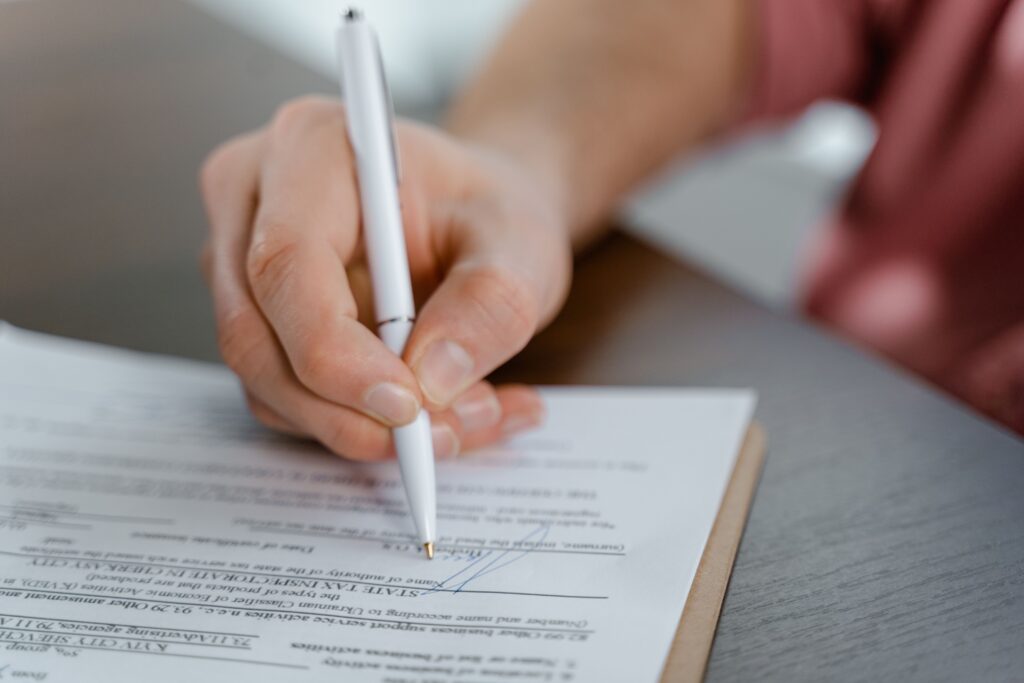
What Happens When Your Expired ID Is Presented at a Hospital, Nursing Home, or Jail
Facility signings raise the stakes because the signer is rarely in a position to run out and renew anything. A patient in a Plano hospital bed, a resident at a McKinney memory care community, or an inmate at the county jail cannot walk into a Department of Public Safety office that afternoon. Family members frequently arrive holding a wallet full of expired cards pulled from a nightstand drawer, and the emotional pressure in the room is intense. A notary still has to apply the same standard, because a power of attorney or a medical directive signed under a questionable identification is the document most likely to be challenged later by a sibling, an insurer, or a court. The identification question therefore needs to be answered before the notary is called, not after they arrive. That single phone call is the difference between a completed signing and a wasted trip during a crisis.
Facilities add their own layers on top of state law. Hospitals often require the signer to be alert, oriented, and free from medications that impair understanding, and nursing staff may weigh in on capacity before a signing proceeds. Detention facilities set visitation windows, approval procedures, and equipment restrictions, and a notary who arrives without prior clearance may not get past the lobby regardless of the paperwork. Long term care communities sometimes require advance notice and may have their own policies about outside notaries. Awareness and willingness are also required by Texas notarial standards, so a signer who cannot understand the document cannot complete it even with perfect identification. Families who gather the credential, confirm the facility rules, and confirm the signer’s condition in advance almost always get a clean signing. Families who improvise usually do not.
When a facility signer holds only an expired card, the practical path is to hunt for an alternative credential before anything else. An unexpired United States passport is the most common rescue, followed by a military identification card, a Veterans Health Identification Card with a photo, or a current identification card from another state where the person previously lived. Adult children often find these documents in a safe deposit box, a filing cabinet, or a travel bag rather than the wallet. When no current credential exists anywhere, the conversation shifts toward what the receiving party will actually accept and what alternatives exist under Texas law for that specific document type, which can vary a great deal. A notary cannot advise you on which document to sign or how to structure your affairs, since that would be practicing law without a license. What a notary can do is tell you plainly, in advance, what identification will and will not work at the bedside.
What to Do Before Your Appointment When Your ID Is Expired
Start by opening every wallet, drawer, and travel bag in the house and laying out every photo credential you own. People routinely forget a passport card, an old military dependent card, a permanent resident card, or an identification card from a prior state, and any one of those can save the appointment. Check the expiration date on each, then check the signature panel, since a passport that was never signed is a passport that will not work. Confirm the name on the credential against the exact name printed on the document you plan to sign. If those two do not match, gather the supporting paperwork now rather than at the table. Take a photo of the front and back of the credential you plan to use and send it to whoever is coordinating the signing. Two minutes of checking prevents an hour of driving.
If nothing current turns up, move immediately to renewal. Texas offers online driver license and identification card renewal for many residents, and eligibility depends on factors like how recently you renewed in person and how your record stands. In person appointments at Department of Public Safety offices in the Dallas metro should be booked as far ahead as you can manage during summer, when demand spikes. A Real ID star on your card is required for boarding domestic flights but is not a requirement for notarization, so a compliant card and a standard card work equally well at a signing. Passport processing through a passport acceptance facility takes considerably longer, so treat that as a backup plan rather than a fast fix. Get the appointment on the calendar first, then set your notary appointment around it.
Communicate early and be direct about the problem. Tell the notary exactly what identification you hold, including the expiration date, before anyone schedules a travel time. A good mobile notary will tell you plainly if the credential will work, if the receiving party is likely to reject it, and what alternatives exist for your document type. That conversation is free, and it is far cheaper than a trip charge for an appointment that cannot be completed. Signers who need a parental consent letter for a summer trip, an apostille packet for a document heading overseas, or a title transfer at the county tax office all face the same identification standard. Solve the credential question first, and the rest of the appointment usually goes quickly. Sending a child on a trip this summer? Click here for our parental consent notary service.
Why You Need a Mobile Notary Who Verifies Your ID Before the Appointment
The best notary appointment is the one where nothing surprising happens. That outcome comes from confirming identification, names, document type, and signer availability before anyone gets in a car. Mobile notary work across the Dallas metro means real driving distance between McKinney, Denton, Greenville, and Rowlett, and a wasted trip costs both sides time they cannot get back. A notary who asks about your identification up front is not being nosy; they are protecting your deadline. Summer schedules are tight, deadlines are real, and second appointments are expensive. Getting it right the first time is the entire job.
Why You Need an ID Check Before Your Summer Travel and School Documents Are Notarized
June through August brings a steady wave of documents tied to travel and school enrollment, and nearly all of them require a notarized signature from an identified adult. Parental consent letters for minors traveling abroad, statements of consent for a child’s passport application, guardianship affidavits for a summer stay with relatives, and residency affidavits for school registration all land in that category. Each one requires the signing parent or guardian to present current identification personally. Missing that step usually means the airline, the consulate, or the school district rejects the paperwork at the worst possible moment. Confirming identification days in advance keeps the trip and the enrollment on track.
Passport paperwork deserves special attention because the rules are specific. A statement of consent from a parent who cannot appear at the passport office must be notarized and submitted with a copy of that parent’s identification, so an expired card creates a problem twice over. The main passport application itself is signed in front of an acceptance agent rather than a notary, and signing it early can force you to start over. Knowing which form goes where saves an entire trip to the post office. A notary who works with passport documents regularly will flag these details before you drive anywhere.
Documents headed to another country add an apostille layer through the Texas Secretary of State, and that process has its own formatting expectations. A notarization performed on questionable identification can be rejected downstream even after the notarial act appears complete. Because apostille processing takes time, a rejection in July can easily push a document past an August deadline. Building in a buffer and confirming identification at the start is the only reliable protection. Plan the credential, then plan the timeline.

Why You Need a Mobile Notary Who Travels Across the Dallas Metro
A mobile notary meets you where the signing actually needs to happen, which matters when the signer is a patient, a parent with young children, a business owner mid shift, or a family gathered around a dining table. Mobile Notary by Kevin travels across the Dallas metro, covering communities like Frisco, Allen, Prosper, Celina, Wylie, Little Elm, Sherman, and Van Alstyne. That coverage means a signing does not have to wait for someone to find a bank branch with a notary on duty during business hours. Evening, weekend, and holiday availability keeps urgent documents moving when offices are closed. Travel is part of the service rather than an afterthought.
Availability matters most when the deadline is not negotiable. Hospital admissions, jail signings, funding deadlines, court filings, and flights do not reschedule themselves around office hours. Round the clock availability, including holidays, means a document that becomes urgent at nine at night has a path forward. That reliability is worth far more than a slightly shorter drive to a storefront. Urgent work is normal work here.
Transparent flat rate pricing removes the other common source of friction. You know the cost before the appointment, with no surprise additions once the notary is standing in your living room. Texas caps notarial act fees by statute, and any travel fee is stated separately and clearly. Clear numbers up front make it easy to decide quickly. That is how a service earns repeat calls from families, agents, and business owners.
Why Choose Mobile Notary by Kevin for Texas ID Questions and Same Day Notarizations
Mobile Notary by Kevin is a National Notary Association certified and background screened notary, carrying errors and omissions insurance with fidelity approval. More than ten thousand documents have been notarized through this practice, which means the identification questions in this trade are familiar rather than theoretical. Expired licenses, name mismatches, foreign passports, and facility restrictions come up constantly, and each one has a practical answer. You get a straight response before the appointment instead of a surprise at the table. Ethos is the foundation of notary work, and it starts with doing identification correctly every single time.
The service covers the full range of documents families and businesses need across Collin, Denton, Grayson, Dallas, and Hunt counties. That includes powers of attorney, estate planning packets, real estate and loan signings, title transfers, immigration paperwork, employment verification forms, and apostille documents. Every one of those relies on the same identification foundation. A notary who checks that foundation early keeps the rest of the process simple. Preparation is the difference between a ten minute appointment and a repeated one.
Do not let an expired card cost you a deadline this summer. Pull out your identification, check the expiration date and the signature panel, and call before you schedule anything important. Reach Mobile Notary by Kevin at (214) 425-9444 to confirm what your credential will support and to book a time that works, including evenings, weekends, and holidays. Need a notary right now? Click here for our emergency notary service.