
The Difference Between a Medical Power of Attorney and a Living Will
Most Texas families sit down with an estate planning packet and assume the medical power of attorney and the living will are two names for the same document. They are not. One appoints a person; the other records your instructions. A medical power of attorney names an agent who can speak for you when a doctor determines you can no longer speak for yourself, and that agent can respond to situations nobody predicted. A living will, known in Texas as a Directive to Physicians, Family or Surrogates, states in writing what you want to happen if you reach a terminal or irreversible condition. Both documents matter, both are recognized under Texas Health and Safety Code Chapter 166, and both fail when they are signed incorrectly. Summer is when this becomes urgent for a lot of families, because July and August bring road trips, out of state travel, surgeries scheduled around vacation time, and college students turning eighteen before fall semester. Knowing the difference now, before a hospital asks for paperwork you do not have, is the entire point of putting these documents in place.
What a Medical Power of Attorney and a Living Will Actually Do in Texas
The simplest way to separate these two documents is to ask what each one produces. A medical power of attorney produces a decision maker. A living will produces a decision. That single distinction explains why estate planning attorneys almost always recommend signing both rather than picking one. Your agent under a medical power of attorney can consent to surgery, choose a facility, review records, and change course as your condition changes. Your living will speaks only to a narrow and very serious set of circumstances involving terminal or irreversible conditions, and it speaks even when nobody else is available to speak for you. Neither document touches your bank accounts, your house, or your taxes; that is the job of a statutory durable power of attorney, which is a separate form with separate signing rules. Understanding what each document covers keeps families from discovering a gap at the worst possible moment.
How a Medical Power of Attorney Works in Texas
A Texas medical power of attorney lets you name one adult as your agent and, ideally, one or two alternates in case your first choice is unavailable. The document does not take effect the moment you sign it. Under Texas law, it activates only after your attending physician certifies in writing that you lack the capacity to make your own health care decisions. Until that certification happens, you remain fully in charge of your own care, and your agent has no authority at all. That delay is intentional and it protects you. Once the document is active, your agent can consent to or refuse treatment, review medical records, speak with the care team, and move you between facilities. The authority is broad because medical situations rarely follow a script.
Choosing the right agent matters more than most people realize. The best agent is not automatically your oldest child or your closest relative; it is the person who can stay calm in a hospital hallway and repeat your wishes accurately under pressure. Texas law prohibits certain people from serving, including your health care provider and an employee of your health care provider, unless that employee is a relative. Your agent should live close enough or travel easily enough to be present when decisions get made. You should also talk to that person in advance, out loud, about what you would want in a serious situation. A signed form with a surprised agent is far weaker than a signed form with a prepared one. Name alternates as well, because the person you pick may be traveling, hospitalized, or unreachable when the call comes.
A medical power of attorney can be revoked at any time, and Texas is unusually flexible here. You can revoke it orally, in writing, or by any act that shows clear intent to revoke, and you can do so regardless of your mental state at the time. Signing a newer medical power of attorney also revokes the older one. If you name your spouse as agent and the marriage later ends by divorce or annulment, that designation is revoked by operation of law unless the document says otherwise. Because of that rule, anyone who has divorced since signing should review the form immediately. Life changes quietly and paperwork does not update itself. Reviewing these documents every few years, and after every major family change, keeps the authority pointing at the right person.

How a Living Will Works in Texas (Directive to Physicians)
The document Texans call a living will is formally titled the Directive to Physicians, Family or Surrogates. It applies only in two defined situations: a terminal condition, meaning an incurable condition expected to cause death within six months even with available treatment, and an irreversible condition, meaning a condition that leaves you unable to care for yourself or make decisions and from which recovery is not expected. Inside those situations, you record what you want. You can direct that life sustaining treatment be provided, or you can direct that it be withheld or withdrawn and that you be kept comfortable. You can add specific instructions in your own words. The form also lets you address artificially administered nutrition and hydration directly. Two physicians must generally certify the qualifying condition before the directive controls care.
People sometimes avoid signing a living will because it feels like giving something up. In practice the opposite is true. Without a written directive, your family is left to guess, and guessing at a bedside creates conflict that can last for years. Adult children who disagree about treatment often disagree loudest when nobody knows what the patient actually wanted. A signed directive removes that argument by putting your voice in the room. It also relieves your agent of the private weight of choosing alone, because the agent is following instructions rather than inventing them. Physicians and hospital ethics committees take these documents seriously and rely on them. The document protects your family as much as it protects you.
A living will is not the same as an Out of Hospital Do Not Resuscitate Order, and confusing the two causes real problems. The Out of Hospital DNR is a specific Texas form that instructs emergency responders, hospital staff outside the hospital setting, and other providers not to attempt resuscitation, and it must be signed by your physician to be valid. A living will does not stop paramedics from performing CPR in your driveway. If avoiding resuscitation outside a hospital matters to you, that conversation belongs with your doctor and requires the separate form. You can revoke a living will at any time, by any method, without regard to your mental state, exactly like a medical power of attorney. Distribute signed copies to your physician, your agent, and your local hospital. A document sitting in a fireproof box at home helps nobody at two in the morning.
How a Medical Power of Attorney and a Living Will Work Together
These two documents were designed to be used as a pair, and they cover for each other’s blind spots. Your living will handles the narrow, catastrophic scenarios with clear written instructions. Your medical power of attorney handles everything else, which is the vast majority of medical events. A stroke, a serious car accident on a summer road trip, a bad reaction to anesthesia, or a sudden infection can leave you unable to communicate without meeting the definition of a terminal or irreversible condition. In those moments the living will stays silent and the agent steps in. Signing only one leaves half the field uncovered. Signing both gives your family a named decision maker and a written standard for that decision maker to follow.
When both documents exist, your agent is expected to honor your known wishes, and the directive is the clearest evidence of what those wishes are. Consistency between the two forms is important. If your living will says one thing and you told your agent something different, the conflict surfaces at the worst possible time. Review both documents together, in one sitting, and make sure the language lines up. Give your agent a copy of each and confirm they have read them. A short conversation now prevents a long dispute later. Families that do this work in advance tend to move through medical crises with far less friction.
Two more documents belong in the same folder. A HIPAA authorization lets your agent and other named people access your medical records, which speeds everything up and avoids a standoff with a records department. A statutory durable power of attorney covers finances, and unlike the medical forms, Texas requires that one to be notarized without exception. Bills keep arriving while someone is hospitalized, and mortgage companies do not accept a medical power of attorney. Building the full set at once is more efficient than assembling it piece by piece during an emergency. Ready to get your estate planning documents signed and notarized correctly? Click here for our estate planning notary service.
Signing and Notarizing a Medical Power of Attorney and a Living Will
Texas gives you a choice on execution, and the choice you make affects how smoothly the document works later. Both the medical power of attorney and the Directive to Physicians can be executed with two qualified witnesses, or the signer can sign and have the signature acknowledged before a notary public instead. That second path exists for a practical reason: qualified witnesses are surprisingly hard to find. The statute disqualifies most of the people standing nearby in a hospital room. Notarization sidesteps the entire problem and produces a document that looks familiar to out of state providers. Signing correctly the first time avoids the second appointment nobody wants to schedule. The rules are specific, and a notary who works with these forms regularly knows where people get tripped up.
Witness Rules for a Medical Power of Attorney and a Living Will
Texas requires two witnesses when you use the witness path, and the first witness must meet a long list of restrictions. That person cannot be related to you by blood or marriage. They cannot be entitled to any part of your estate under a will or by operation of law. They cannot be your attending physician or an employee of your attending physician. They cannot be an employee of the health care facility where you are a patient if that employee provides direct patient care or is an officer, director, partner, or business office employee of the facility. They cannot have a claim against your estate. Under a medical power of attorney, the first witness also cannot be the agent you are naming. Read that list against the people in the room and the problem becomes obvious fast.
In a hospital, almost everyone available is either family or facility staff. Your daughter is disqualified, your nurse is likely disqualified, your agent is disqualified, and the neighbor who drove you there may be a beneficiary under your will. Families end up wandering hallways asking strangers for a favor, which is neither dignified nor reliable. Nursing homes present the same obstacle, often worse, because staff members make up most of the building’s population during a weekday afternoon. A signature witnessed by a disqualified person creates a document that may be challenged later, and the challenge always arrives when the document is needed most. This is the single most common execution failure with Texas advance directives. It is entirely preventable.
The second witness has fewer restrictions and simply needs to be a competent adult, but you still need both. Some families solve the problem by signing at home in advance, with two unrelated neighbors present, which works well when there is time to plan. Emergencies rarely offer that luxury. When a surgery is scheduled for the next morning or a condition is worsening quickly, the notary path is faster and cleaner. A mobile notary arrives with proper identification checks, a journal, and a seal, and the acknowledgment satisfies the statute on its own. No hunting for two unrelated adults at nine at night.

When Notarizing a Medical Power of Attorney Is the Better Choice
Notarization is generally the stronger option for anyone who travels, owns property in another state, or has family spread across the country. A notarized signature carries recognizable authority everywhere, and out of state hospital staff who have never read the Texas Health and Safety Code will still recognize a notary seal. Snowbirds who leave Texas for months, retirees who spend summers with grandchildren in another state, and anyone with a second home should lean toward notarization. The same applies to college students heading out of state in August. Once a student turns eighteen, parents lose automatic authority over medical decisions and access to records, which catches families off guard every fall. A notarized medical power of attorney and HIPAA authorization solve that gap before move in day.
Notarization also produces a record. A Texas notary keeps a record book documenting the transaction, the identification presented, and the date, which creates independent evidence that the signing happened and that the signer was properly identified. If anyone later questions the document, that record exists. Witnesses, by contrast, move away, forget details, and sometimes have their own stake in the outcome. For families with any history of disagreement, the neutrality of a commissioned notary is valuable on its own. The notary has no interest in the estate and no opinion about the treatment decisions. That neutrality is part of what makes the document hold up.
There is one thing a notary cannot do, and reputable notaries say so plainly. A Texas notary is not permitted to give legal advice, explain the legal effect of a document, choose which form you should use, or help you decide what to write in the blanks. Asking a notary which document you need is asking for something the notary is prohibited from providing. The notary verifies identity, confirms the signer is signing willingly and appears aware of what is happening, administers the oath or takes the acknowledgment, and completes the certificate. Everything upstream of that belongs to you and your attorney. Need a power of attorney notarized quickly? Click here for our power of attorney notary service.
Common Mistakes That Invalidate a Medical Power of Attorney or a Living Will
Blank spaces cause more rejected documents than any other single issue. Texas notaries cannot notarize a document with incomplete blanks, and a form with an unfinished agent designation or a missing date creates an opening for later dispute. Fill everything in before the appointment, and mark sections that do not apply rather than leaving them empty. Bring a valid, unexpired government issued photo identification; an expired license is one of the most frequent reasons an appointment fails. Sign nothing in advance, because the notary must witness the signature or take a proper acknowledgment. Make sure the names on the document match the names on the identification. Small mismatches create big delays.
Capacity is the issue that ends appointments outright, and it deserves honest discussion before anyone books a signing. A notary must decline when the signer cannot demonstrate awareness of the document being signed, cannot communicate an intent to sign, or appears to be acting under pressure from someone in the room. That standard applies with real weight in hospitals and memory care units, especially when a patient is heavily medicated or moving in and out of alertness. The notary is not diagnosing anything; the notary is confirming that the signer is present, aware, and acting voluntarily. Families sometimes push back, and a notary who bends on this point is not protecting anyone. Scheduling around a patient’s clearest hours of the day gives the signing the best chance of success.
Finally, a signed document that nobody can find does not work. Deliver copies to your physician’s office so the directive goes into your medical record. Give your agent a copy and tell that person where the original lives. Send a copy to the hospital system you would most likely use. Keep a photograph of both documents on your phone and on your agent’s phone, since emergencies do not wait for a filing cabinet. Review the paperwork after any divorce, death, move, or serious diagnosis. Documents that were correct five years ago may point at the wrong person today.
Why You Need a Mobile Notary for Your Medical Power of Attorney and Living Will
Advance directives get signed under conditions that do not fit a bank lobby’s business hours. Somebody is admitted on a Friday evening, a surgery is moved up, a parent’s condition changes, or a family finally sits down together during a summer visit and wants the paperwork handled before everyone flies home. A mobile notary meets you where the signing has to happen, at a hospital bedside, a nursing home dayroom, a kitchen table, or an office. That flexibility is not a convenience feature for medical documents; it is often the only workable option. Mobile Notary by Kevin travels across the Dallas metro area, including McKinney, Frisco, Plano, Allen, Prosper, Celina, Denton, and the surrounding communities. Pricing is flat rate and stated up front, so nobody is surprised during an already stressful week.
Mobile Notary Service for Medical Power of Attorney Signings at Home
Home signings are the calmest way to handle a medical power of attorney, and calm produces better paperwork. Everyone can sit down, read the forms without a monitor beeping, and ask questions of their attorney before signing. Families often use a summer visit to get this done, since siblings are in town and schedules briefly overlap. A mobile notary arrives at the agreed time with identification verification, a record book, and a seal, and the appointment usually takes less time than the drive to a bank would. There is no waiting room and no sitting on hold with an appointment line.
Home appointments also work well for people with limited mobility, chronic conditions, or transportation limits. Texas heat in July and August makes leaving the house genuinely risky for older adults, and an errand that requires a parking lot walk is not a small ask. Bringing the notary to the door removes that entire barrier. Caregivers appreciate not having to coordinate a wheelchair van for a fifteen minute signature. The signer stays comfortable and stays in a familiar environment, which tends to help with clarity and confidence. That matters when awareness and voluntariness are part of what is being confirmed.
Evening and weekend appointments are available, including holidays, because family schedules rarely clear during business hours. Availability runs twenty four hours a day for situations that cannot wait until Monday. Bundling documents into one visit is common and efficient, since the medical power of attorney, the directive, the HIPAA authorization, and the statutory durable power of attorney can all be handled in a single appointment. Have your forms complete and your identification ready and the visit moves quickly. One appointment, one flat rate, one finished folder.
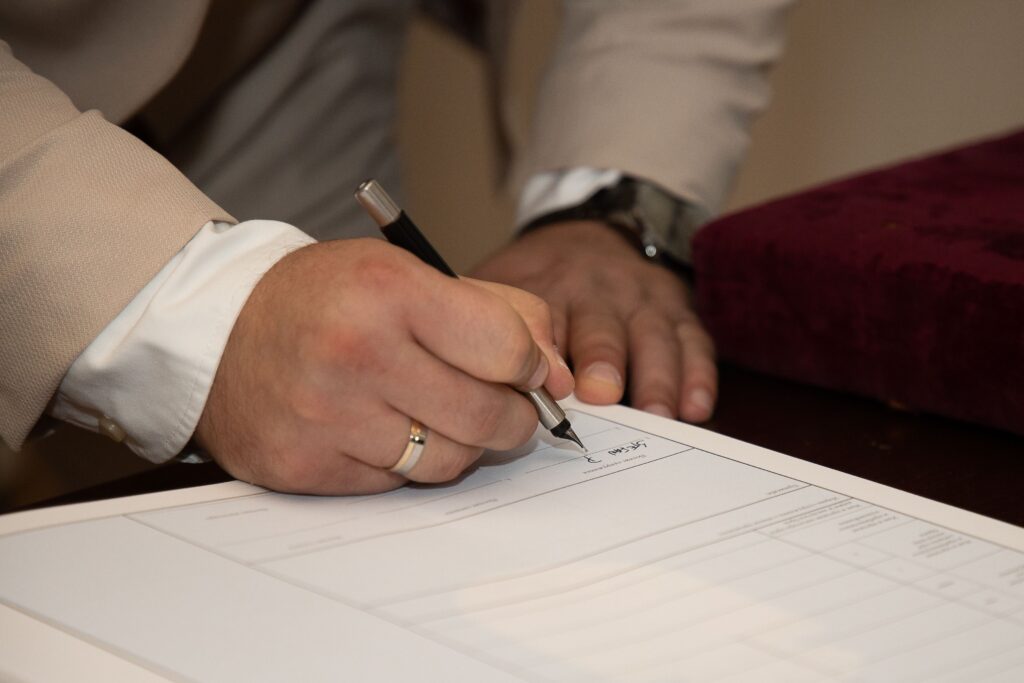
Hospital and Nursing Home Notary Visits for Living Will Signings
Hospital signings require a notary who understands the environment. Visiting hours, nursing shift changes, patient testing schedules, and facility check in procedures all affect timing, and a notary who has done this many times works with those constraints instead of fighting them. Mobile Notary by Kevin travels to hospitals, rehabilitation centers, hospice facilities, and nursing homes throughout the Dallas metro area. Appointments are scheduled around the patient’s best window of alertness whenever possible. Coordination with the nursing staff happens quietly and respectfully.
Nursing home and assisted living signings carry the added complication that most available witnesses are disqualified facility employees. Notarization solves that problem directly, since the acknowledgment satisfies the Texas execution requirement without a single witness. Facility staff generally appreciate not being asked to participate in resident legal documents. The visit stays brief and unobtrusive, and residents are not moved or disrupted. Discretion is part of doing this work properly.
Every signing is handled with the same standard regardless of setting. Identification is verified, awareness and voluntariness are confirmed, the record book is completed, and the certificate is filled out correctly. When a signer is not able to proceed, the appointment is stopped and the family is told honestly why. That standard protects the patient and protects the validity of the document. Need a notary to come to a hospital or care facility? Click here for our hospital notary service.
Why Choose Mobile Notary by Kevin for Medical Power of Attorney and Living Will Notarization
Mobile Notary by Kevin is NNA certified and background screened, carries errors and omissions insurance, and is fidelity approved. More than 10,000 documents have been notarized across the Dallas metro area, including a steady volume of advance directives and estate planning packets. That experience shows up in the details: complete certificates, correct identification checks, proper record keeping, and a clear explanation of what a notary can and cannot do. Ethos is not a marketing word here. A notarization done correctly is worth exactly as much as the care taken while doing it.
Scheduling is straightforward and pricing is flat rate every time, with no surprise travel fees added after the fact. Service covers McKinney, Frisco, Plano, Allen, Prosper, Celina, Melissa, Anna, Princeton, Wylie, Murphy, Sachse, Richardson, Garland, Rowlett, Denton, Little Elm, The Colony, Lewisville, Carrollton, Sherman, Van Alstyne, Greenville, and many nearby communities. Same day and after hours appointments are available, including holidays and weekends. Families dealing with a medical situation should not also be negotiating over a service call. You get a time, a price, and someone who shows up.
Advance directives are the documents you hope nobody ever has to use, which is exactly why they should be executed correctly the first time. Get the forms from your attorney, fill them out completely, gather your identification, and let a professional handle the signing. To schedule a medical power of attorney or living will notarization anywhere in the Dallas metro area, call Mobile Notary by Kevin at (214) 425-9444 and pick a time that works for your family. Appointments are available twenty four hours a day, seven days a week. One visit is usually all it takes.