
What Documents Belong in an Estate Plan and Which Ones Must Be Notarized
An estate plan is a stack of separate legal documents that work together, and each one carries its own signing rules under Texas law. Some of those documents fall apart without a notary seal. Others are perfectly valid with two witnesses and no notary at all. A handful sit in the middle, where the law gives you a choice and the institution receiving the document quietly makes that choice for you. Summer is when a lot of Texas families finally sit down and handle this, because adult children are home, parents are visiting, and travel plans push the question of “what happens if something goes wrong” to the front of the line. Getting the signing wrong is expensive in a way that does not show up for years, usually at the exact moment the family can least afford a delay. Knowing which papers need a notary, which need witnesses, and which need both keeps a probate court from throwing out work you already paid for. The list below reflects how Texas estate documents are actually executed and what a mobile notary can and cannot do at the table.
What Documents Belong in a Texas Estate Plan
A complete Texas estate plan covers three jobs: moving property after death, naming someone to act during life, and stating medical wishes in advance. Most families think only about the will and stop there, which leaves large gaps while the person is still alive. A will does nothing until death; it has zero authority during a hospital stay, a stroke, or a long decline. Powers of attorney and medical directives handle that middle stretch, and they are the documents families most often wish they had signed sooner. Property documents like deeds and beneficiary designations move assets outside the will entirely, sometimes overriding what the will says. Texas also offers tools that other states do not, including the transfer on death deed and a very forgiving rule for handwritten wills. Each document has a different execution standard, so treating the whole packet as one signing event is a common and costly mistake. Attorneys draft these papers; notaries verify identity and witness the act of signing.
Core Estate Plan Documents Every Texas Family Should Have
The last will and testament is the anchor of most Texas estate plans, naming an executor, directing property, and appointing a guardian for minor children. Texas recognizes two valid forms of will, and the difference matters enormously at signing time. An attested will must be signed by the testator and by two credible witnesses who are at least fourteen years old and who sign in the testator’s presence. A holographic will, written entirely in the testator’s own handwriting and signed, needs no witnesses and no notary whatsoever. Most families use the attested version because it holds up better and is far easier for a court to accept. The witnesses should be people who inherit nothing under the document, since Texas law can void a gift to a witness who was needed to prove the will. That single detail derails more home signings than any other issue. Choose neutral witnesses before the appointment, not in the moment.
A revocable living trust is the second anchor for families who want to keep property out of probate or who own real estate in more than one state. The trust document itself names a trustee, a successor trustee, and beneficiaries, and it controls only the assets actually retitled into it. Funding the trust is where most plans quietly fail, because signing the trust and never transferring the house accomplishes very little. Real property moves into a trust through a deed, and that deed carries its own notarization requirement. A pour over will usually accompanies the trust to catch anything left outside it. Trustees also frequently need a certification of trust, a short sworn summary that banks accept in place of the full document. Texas trust law does not force a trust to be notarized to exist, but almost every institution behaves as though it does. Practical acceptance, not bare validity, is the standard worth planning for.
Rounding out the core set are the guardianship declarations that most people never hear about until a crisis. A declaration of guardian in advance of need lets you name who a court should appoint if you ever become incapacitated, and just as importantly, who should never be appointed. Parents can also sign a separate declaration naming a guardian for minor children in case both parents die or become unable to serve. These documents give a judge clear direction instead of leaving the choice to competing relatives. They are short, inexpensive, and dramatically reduce family conflict later. Texas allows them to be proved either with witnesses or with a notarized self proving affidavit attached. Families who sign them alongside the will keep the whole record consistent. Need a notary to come to your kitchen table for the full packet? Click here for our estate planning notary service.

Health Care Estate Plan Documents That Speak When You Cannot
The medical power of attorney is the single most used document in any Texas estate plan, and it is the one hospitals ask for first. It names an agent to make health care decisions when a physician certifies that you cannot make them yourself. Texas law limits who may serve as a witness on this document, and the restrictions catch people off guard constantly. One of the two witnesses cannot be the named agent, cannot be related by blood or marriage, cannot be entitled to any part of the estate, and cannot be the attending physician or an employee of the health care provider. Because assembling two qualifying witnesses inside a hospital is nearly impossible, Texas allows the alternative of signing and acknowledging the document before a notary. That alternative is why mobile notaries get called to hospital rooms at odd hours. The notary route removes the witness eligibility problem entirely. It is faster, cleaner, and far less likely to be challenged later.
A directive to physicians, commonly called a living will, states your wishes about life sustaining treatment when you have a terminal or irreversible condition. It works alongside the medical power of attorney rather than replacing it, giving your agent written guidance instead of guesswork. Texas gives this document the same two paths: sign in front of two qualifying witnesses, or sign and acknowledge before a notary. An out of hospital do not resuscitate order follows a similar structure and requires a physician signature as well. These are emotionally heavy documents, and the signing deserves a calm setting instead of a rushed one. Families often sign them at home weeks before they are ever needed, which is exactly the right approach. A notary confirms that the signer is aware, willing, and acting without pressure. That confirmation is part of what makes the document defensible.
A HIPAA authorization is the quiet workhorse of the medical group. Without it, doctors and hospitals can legally refuse to share information with the very family members trying to help. Federal law does not require this form to be notarized, and most providers accept a plain signed release. Many families still have it notarized because a notarized version tends to move through unfamiliar front desks with far less friction. The same logic applies to a designation of health care agent when the primary agent is unavailable. Keep copies accessible rather than locked away, since a document nobody can find is functionally the same as a document that does not exist. Give a copy to each named agent and to the primary physician. If a signing is needed at a facility, click here for our hospital notary service.
Property and Beneficiary Estate Plan Documents That Move Assets
Real estate is the largest asset in most Texas estates, and it moves through documents that are entirely separate from the will. A transfer on death deed lets an owner name a beneficiary who receives the property automatically at death, with no probate and no loss of control during life. The owner can sell, mortgage, or revoke at any time, which makes it far more flexible than adding a child to the title. Texas requires this deed to be signed, acknowledged before a notary, and recorded in the county deed records before the owner dies. Recording after death does nothing; the window closes permanently. A lady bird deed, also called an enhanced life estate deed, accomplishes a similar result through different language. Both must be notarized because Texas requires an acknowledgment before an instrument can be recorded. This is the clearest example of a document that is worthless without a notary.
Beneficiary designations on retirement accounts, life insurance, and payable on death bank accounts control more wealth than most wills do. These forms pass property directly to the named person and override anything the will says about that account. Reviewing them every few years catches the ex spouse still listed as primary beneficiary, a problem that surfaces constantly in probate. Most of these forms require no notarization at all, since the institution accepts its own paperwork. There is one large exception worth knowing. Federal law governing employer retirement plans generally requires a spouse who waives survivor benefits to sign a consent that is notarized or witnessed by a plan representative. That single notarized signature can decide who receives a six figure account.
Other property documents show up after a death rather than before it, and nearly all of them require a notary. An affidavit of heirship is sworn before a notary by disinterested witnesses and recorded in the county real property records to establish who inherited land when no probate occurred. A small estate affidavit is sworn and filed with the court to transfer limited assets without full administration. Deeds transferring property into a living trust must be acknowledged and recorded exactly like any other deed. Vehicle titles, mineral interests, and business ownership documents each carry their own signing requirements. Texas notaries verify identity and administer the oath; they do not draft these instruments or advise on which one fits. Coordinating with an attorney on the drafting and a notary on the execution keeps both sides clean. Click here for our real estate notary service if property documents are part of your packet.
Which Estate Plan Documents Must Be Notarized in Texas
Texas law does not apply one blanket rule to estate documents, and the differences are sharper than most people expect. Three categories exist: documents that legally cannot function without a notary, documents where a notary is one of two acceptable options, and documents that never require a notary but frequently get one anyway. The will sits in a category of its own and surprises nearly everyone. Notarization does not make a Texas will valid; witnesses do. What notarization adds to a will is the self proving affidavit, a separate attachment that saves the family from tracking down witnesses years later. Powers of attorney and recordable deeds land firmly in the mandatory column. Medical documents give you a choice, and the notary path is almost always the easier one. Knowing which bucket each document falls into prevents a second signing appointment.
Estate Plan Documents That Must Be Notarized to Be Valid or Recorded
The Texas statutory durable power of attorney tops this list without exception. State law requires it to be signed by the principal and acknowledged before a notary or another officer authorized to take acknowledgments. No witness combination substitutes for that requirement. This document authorizes an agent to manage banking, real property, investments, taxes, insurance, and business interests, which is precisely why the law demands a formal acknowledgment. Banks and title companies scrutinize durable powers of attorney harder than any other estate document, and an unnotarized one gets rejected instantly. Signing it while the principal is clearly competent protects everyone involved. Waiting until capacity is in question creates a problem no notary can solve. Once a signer cannot understand what they are signing, the only remaining path is a guardianship proceeding in court.
Every document intended for the county deed records must be acknowledged before a notary before the clerk will accept it. That covers transfer on death deeds, lady bird deeds, warranty deeds transferring property into a trust, gift deeds, and deeds of trust. Texas property law conditions recording on a proper acknowledgment, so the notary block is not a formality. The signer must appear in person, present valid identification, and sign willingly and knowingly. A missing seal, an expired commission, or a defective acknowledgment can send the whole instrument back from the clerk’s office. Correcting a rejected deed after the owner has died or lost capacity ranges from difficult to impossible. Verifying the notary details before recording takes minutes and saves months.
Sworn affidavits used in estate administration also belong in the mandatory column, because an affidavit is by definition a statement made under oath. Affidavits of heirship, small estate affidavits, affidavits of death, and certifications of trust all require a notary to administer the oath and complete a jurat. The signer must swear to the truth of the contents, not merely acknowledge a signature. Texas notaries are required to keep a record book entry for these acts, which creates a permanent trail. That record has resolved more than a few later disputes about who signed what and when. Bring current identification, since a notary who cannot verify identity is legally required to decline. Expired driver licenses and unsigned identification cards are the two most frequent reasons an appointment stalls. Confirm identification requirements before the notary arrives.
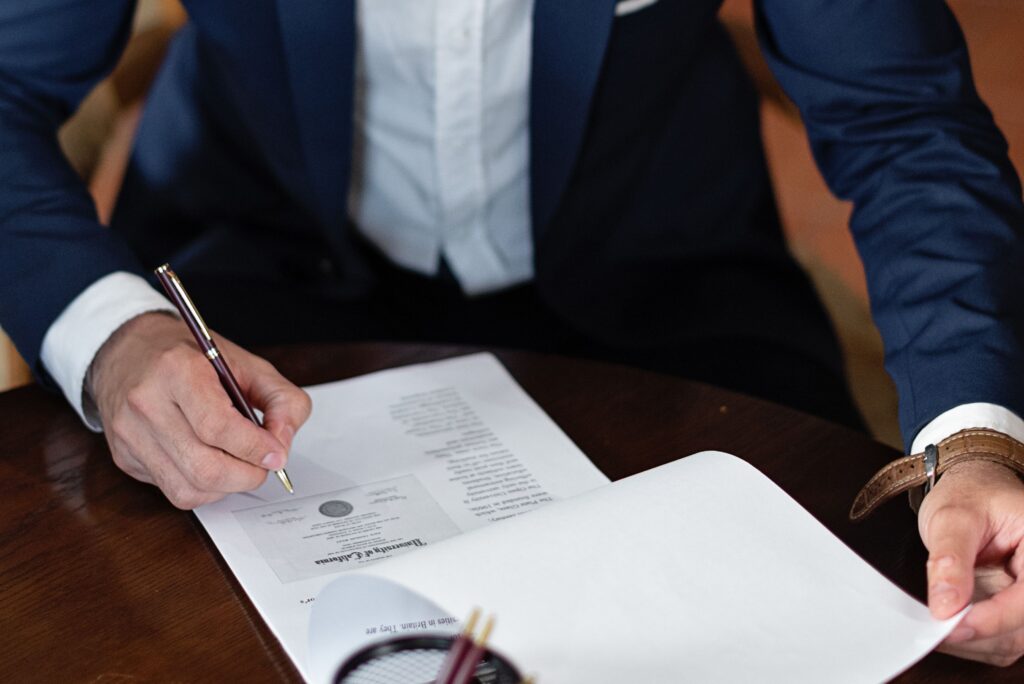
Estate Plan Documents That Must Be Notarized or Witnessed, Your Choice
Texas health care documents give signers two valid execution paths, and understanding both prevents wasted trips. A medical power of attorney may be signed in the presence of two qualifying witnesses, or it may be signed and acknowledged before a notary with no witnesses required. The directive to physicians follows the identical structure. So does the out of hospital do not resuscitate order, with the added requirement of a physician signature. On paper the two options look equivalent, but in practice they are not close. The witness restrictions eliminate spouses, children, heirs, the named agent, and anyone employed by the treating facility. Finding two eligible strangers at a bedside is a real obstacle, while a notary appointment solves it in one visit.
Declarations of guardian follow the same either or pattern. A declaration of guardian in advance of need can be executed with two witnesses or made self proved through a notarized affidavit attached to the document. The self proved version carries obvious advantages when the declaration is presented to a court years after signing. Witnesses move, change names, lose contact, and pass away. A notarized self proving affidavit removes the need to locate any of them. Courts accept the notarized version on its face, which shortens an already difficult process. Families dealing with a parent’s cognitive decline feel that difference immediately.
The will occupies the most misunderstood position in this category. Two witnesses make a Texas attested will valid, and a notary alone does not. Attaching a self proving affidavit, signed by the testator and both witnesses in front of a notary, allows the will to be admitted to probate without the witnesses testifying. Nearly every Texas estate attorney includes that affidavit for exactly this reason. The correct signing therefore involves three people plus the notary: the testator, witness one, and witness two. The notary should not double as one of the two witnesses, so arrange for separate individuals. Neighbors, coworkers, and family friends who inherit nothing are ideal choices. Line those people up before the appointment and the entire packet finishes in a single sitting.
Estate Plan Documents That Do Not Need to Be Notarized but Often Are
Several estate plan documents carry no legal notarization requirement, yet they get notarized constantly because the receiving institution prefers it. HIPAA authorizations, letters of instruction, funeral preference statements, personal property memoranda, and digital asset access lists all fall into this group. None of them require a seal to be effective. All of them travel more smoothly with one. A bank employee or hospital administrator looking at an unfamiliar document tends to accept it faster when a notary block appears at the bottom. That is a practical reality rather than a legal rule, and it is worth accommodating.
Living trusts themselves sit in this same practical zone. Texas does not condition the validity of a trust on notarization, but banks, brokerages, and title companies routinely refuse to act on one without it. Adding a notarized signature at execution costs almost nothing and prevents a refusal later. The same applies to the certification of trust that successor trustees present to financial institutions. Trustees who show up with a properly notarized certification get accounts released; those without one get sent home. Because the successor trustee is usually acting in the middle of a family crisis, that difference is significant. Preparing the documents correctly at signing removes a barrier at the worst possible moment.
Personal property memoranda and letters of instruction round out the group. These informal documents distribute household items, explain reasoning behind decisions, list account locations, and provide passwords or access instructions. Courts treat them as guidance rather than binding directives in most cases. Notarizing them adds credibility and reduces arguments among heirs about authenticity. Handwriting can be disputed; a notarized signature is much harder to challenge. Store the originals with the will and give the executor clear instructions on where to find everything. A well organized packet does more good than a perfectly drafted one nobody can locate.
Why You Need a Mobile Notary for Your Estate Planning Documents
Estate planning packets are signed in the wrong place more often than they are signed incorrectly. Getting an elderly parent into a bank lobby, coordinating two witnesses across town, and hoping the branch notary has time before closing is a plan that fails regularly. A mobile notary reverses the logistics by bringing the commission to the signer, at home, at a hospital, at a rehabilitation facility, or at a law office. That flexibility matters most when capacity is declining and the signing window is narrowing. It also matters for healthy families who simply want the packet finished in one evening. Texas requires the signer to appear personally before the notary, so the notary traveling is the only way to keep that requirement satisfied without moving the signer.
How a Mobile Notary Makes Estate Planning Document Signings Simple
A mobile notary handles the full packet in one appointment instead of splitting it across several trips. Wills, powers of attorney, medical directives, deeds, and affidavits each get the correct notarial act applied, either an acknowledgment or a jurat depending on the language on the page. Mixing those two up is one of the more common errors in do it yourself signings and can invalidate the certificate. A trained notary reads the notarial wording on each document and completes it as written. The record book entry is made at the time of signing, creating a durable record of the transaction. Signers get a finished, consistent packet rather than a pile of partially executed papers.
Location flexibility is the practical benefit families feel most. Signings happen in living rooms, hospital rooms, nursing facilities, assisted living apartments, memory care units, attorney conference rooms, and rehabilitation centers. Facility staff often cannot notarize, will not serve as witnesses, or are unavailable outside business hours. A mobile notary arrives on schedule with the tools needed and works around visiting hours and treatment schedules. Evening and weekend appointments are frequently the only realistic option for working families. Availability around the clock, including holidays, removes the scheduling excuse that keeps packets unsigned for years.
There are limits worth stating plainly, and honoring them is what protects the document. A notary cannot give legal advice, cannot decide which documents you need, cannot draft or correct language, and cannot tell you how to fill in a blank. A notary also cannot proceed when the signer does not appear to understand the document or appears to be acting under pressure from someone in the room. Declining in those situations is not obstruction; it is the safeguard that makes notarization meaningful. Signers must present current identification with a photograph and signature, or qualify through a credible witness. Families who understand these boundaries in advance have far smoother appointments. Need an agent appointment handled correctly? Click here for our power of attorney notary service.

What to Have Ready Before Your Estate Planning Notary Appointment
Preparation turns a ninety minute appointment into a thirty minute one. Have every document printed in full, single sided, with no pages missing and no signatures already applied. Signing in advance defeats the purpose, since Texas requires the signature or the acknowledgment of it to occur in the notary’s presence. Leave all blanks completed except the signature lines and the notarial certificate. A document with open blanks cannot be notarized as written. Gather current government issued identification for every person who will sign.
Line up witnesses before the appointment rather than during it. Two witnesses are needed for an attested will and its self proving affidavit, and they should be adults who inherit nothing under the document. For medical documents executed the witness route, confirm that neither witness is the named agent, a relative, an heir, or an employee of the treating provider. Choosing the notary path for medical documents removes those restrictions entirely and usually saves time. Confirm the number of signers and witnesses when scheduling so the appointment is sized correctly. A quiet room with a clear table and good lighting makes the process faster for everyone.
Think about copies and storage before the pen touches paper. Originals of a will should stay in one secure, findable location, and the executor needs to know where that is. Deeds require recording with the county clerk, so plan for that step immediately after signing rather than months later. Medical documents belong with the primary physician, the named agent, and the family member most likely to be called first. Powers of attorney should be provided to the banks and institutions the agent will need to work with, since many keep them on file. A signed packet nobody can find helps no one.
Why Choose Mobile Notary by Kevin for Your Estate Planning Notary Needs
Mobile Notary by Kevin is NNA certified, background screened, E and O insured, and fidelity approved, which is the credential set financial institutions and title companies expect to see. More than ten thousand documents have been notarized across the Dallas metro area, including estate packets signed at homes, hospitals, and long term care facilities. That volume matters because estate documents carry unusual variety, from simple acknowledgments to sworn affidavits to multi party will signings. Flat rate pricing is quoted before the appointment, with no surprises added at the table. Availability runs around the clock, including weekends and holidays, because medical situations do not follow business hours.
Service covers McKinney, Frisco, Plano, Allen, Prosper, Celina, Melissa, Anna, Princeton, Wylie, Murphy, Sachse, Garland, Richardson, Carrollton, Lewisville, The Colony, Little Elm, Denton, Aubrey, Sherman, Van Alstyne, Greenville, and the surrounding communities. Appointments are scheduled around family availability, facility visiting hours, and attorney calendars. Rush and after hours requests are handled routinely rather than treated as exceptions. Every signing follows Texas notarial requirements exactly, including personal appearance, identification verification, and proper completion of the notarial certificate. Ethical practice is the point, not a marketing line.
Estate documents are worth doing once and doing correctly. A properly executed packet spares a family from probate delays, rejected deeds, frozen accounts, and courtroom disputes at a time when none of that should be their concern. Bring the documents; a certified mobile notary brings everything else and comes to the location that works. Emergency and same day signings are available when a hospital or facility situation cannot wait, and you can click here for our emergency notary service in those situations. To schedule an estate planning notary appointment anywhere in the Dallas metro area, call Mobile Notary by Kevin at (214) 425-9444 or email mobilenotarybykevin@gmail.com.